Delhi Witness Soaring Mercury: March Start With Record Heat Of Fifty Years


Key Takeaways:
- Safdarjung recorded 35.7°C on 7 March 2026, the hottest first-week March temperature in 50 years.
- Delhi has crossed 35°C for three consecutive days, unusual for early March.
- Clear skies, weak winds, and lack of February rain have contributed to the heat build-up.
- Weather change possible between 14–20 March as a western disturbance and induced circulation approach.
Delhi has persistently recorded very high temperatures during the month of March 2026. Base station Safdarjung registered the hottest day of the first week of March in the last 50 years. The mercury soared to 35.7°C, about 7.3°C above normal, on 07th March 2026. It surpassed the earlier record of 34.8°C set in March 1999. The capital city has recorded a hat trick of breaching 35°C over the last three days. Today, it may be a shade better but is still likely to cross the 35°C mark.
As per pentad normal, Delhi starts with a day high of 27°–28°C in March and ends up with a maximum of 33°–34°C. The temperatures that are generally witnessed at the end of the month are getting far exceeded at the start itself. Apparently, the absence of an active western disturbance, coupled with clear days and nights, has resulted in the accumulation of heat, leading to a sharp rise in temperatures. Missing rains in the month of February have added to the seasonal warmth. A decent spell of rain was last observed sometime around Republic Day, and it has generally remained quiet thereafter.
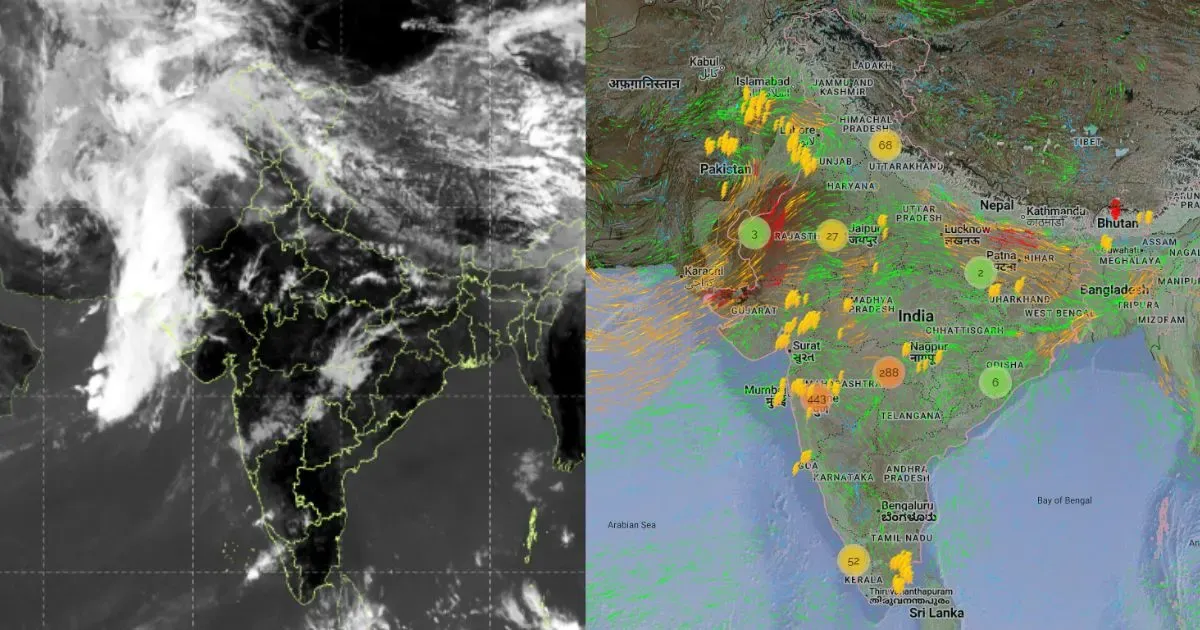
There is a western disturbance moving across the mountains. It has resulted in cloudy skies along the foothills such as Jammu, Pathankot, and Chandigarh. Further south, there are very few patches and these are unlikely to influence the weather conditions. Surface and low-level winds will remain light. The normal rise of temperature on account of weakening winds will be balanced by the weather activity over the mountains and along the foothills. Therefore, no spike is likely in the mercury level.
There are early indications of the approach of an active weather system between 14th and 16th March 2026. The western disturbance and the induced circulation, together, may start with the opening spell of pre-monsoon activity. However, it is a little early to predict with confidence. Model reliability drops further during the pre-monsoon season, and the lead time effectively reduces to 2–3 days. Notwithstanding, the pre-monsoon may announce its arrival very soon, and changed weather conditions are expected between 14th and 20th March 2026.