World Meteorological Day 2026: Weather Forecasting, AI & the Global Climate Equation

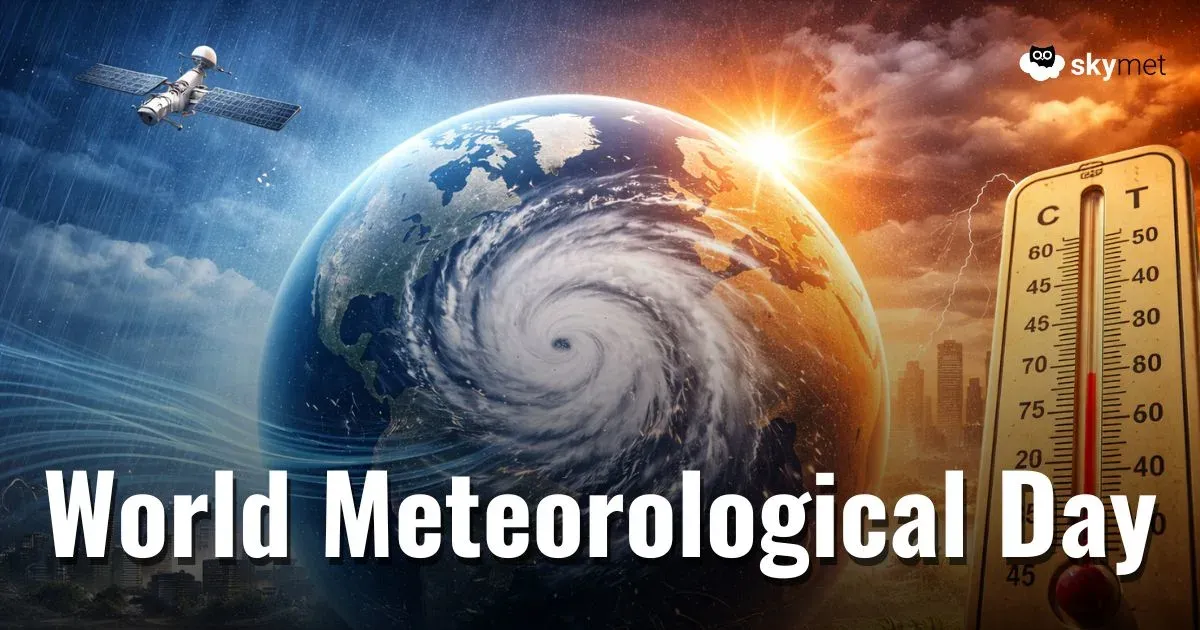
Representational Image: AI-Skymet
Key Takeaways:
- Meteorology has evolved into a frontline tool for survival amid climate change.
- Early warning systems are significantly reducing disaster-related fatalities.
- Hyper-local forecasting is enabling precise, impact-based decision-making.
- Weather intelligence is now critical for sectors like agriculture, urban planning, and energy.
Today, March 23, marks the 66th official World Meteorological Day, with the first observance dating back to 1961. Over the decades, meteorology has transitioned from occupying the back pages of newspapers to standing firmly on the front lines of human survival in 2026.
In an era of accelerating climate change, weather is no longer a distant or abstract phenomenon—it has become a matter of everyday relevance, shaping decisions, safety, and livelihoods across the globe. Increasingly, it is seen as a critical pillar of disaster preparedness and climate resilience.
World Meteorological Day also highlights the growing importance of early warning systems, now considered the gold standard in saving lives. The global “Early Warnings for All” initiative aims to ensure universal coverage by 2027, supported by high-resolution modeling that delivers hyper-local alerts. These advancements enable precise, science-backed interventions—guiding communities on when and where to act during extreme weather events.
According to the World Meteorological Organization, such systems have already contributed to a significant reduction in disaster-related fatalities in several regions.
From Forecasts to Actionable Intelligence
Modern meteorology is no longer limited to predicting rain or sunshine. Advances in satellite technology, artificial intelligence, and high-resolution modeling now allow scientists to generate hyper-local forecasts with remarkable precision.
Early warning systems, aligned with the global vision of “Early Warnings for All” by 2027, are transforming how communities respond to extreme weather—turning data into timely action. Whether it is alerting a coastal settlement about an incoming cyclone or guiding urban authorities during intense rainfall, the emphasis today is on impact-based forecasting.
Climate Reality and the Water Connection
The effects of climate change are unfolding in real time. Rising temperatures, erratic monsoon patterns, and frequent extreme events are no longer anomalies but emerging trends.
These shifts are closely tied to water availability, highlighting the growing climate-water nexus. For farmers, this means adapting sowing and harvesting cycles based on evolving weather patterns. For cities, it involves redesigning infrastructure to manage heat stress and sudden downpours. In this context, weather intelligence has become an essential input for decision-making across sectors.
Skymet’s Role in Meteorology
In India, the need for reliable and localized weather insights has never been greater. Since its inception, Skymet has focused on translating complex atmospheric data into practical, usable information. We integrate satellite observations, on-ground sensors, and advanced analytics to support sectors such as agriculture, energy, and logistics in navigating weather-related uncertainties. Our commitment lies in making weather intelligence accessible, actionable, and relevant to everyday life.
Looking Ahead: Science with a Human Lens
As meteorology continues to advance, its true value will be measured not just in accuracy, but in accessibility and impact. Weather does not recognize borders, and neither should the efforts to understand it—collaboration between nations, institutions, and individuals remains key. Ultimately, meteorology is not just about studying the skies; it is about safeguarding communities, supporting livelihoods, and building a future that is better prepared for what lies ahead.